Alligator vs Crocodile: How to Tell Them Apart, and Where Each One Lives
August 10, 2026 · 3 min read
Every guide to telling alligators from crocodiles opens with the snout. That works, but it skips the quicker test.
Alligators and crocodiles barely overlap. Across the whole planet there is one region where both live side by side in the wild, so in almost every case, knowing where a photo was taken settles the question before you have looked at the animal at all.
Start with the map
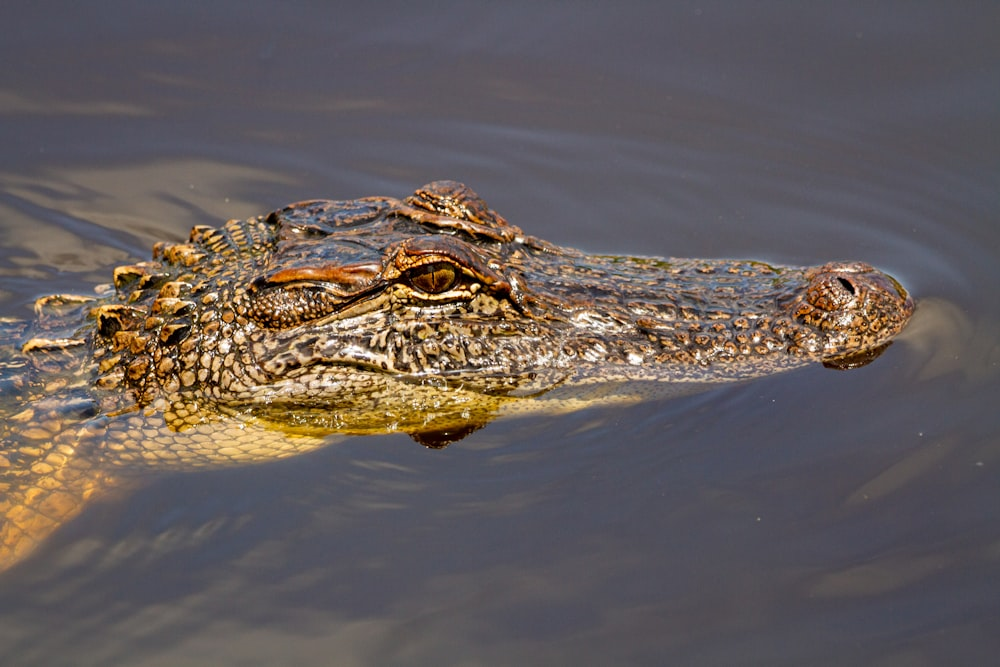
There are only two living alligator species. The American alligator occupies the wetlands of the southeastern United States, from Texas to the Carolinas. The Chinese alligator survives in a short stretch of the lower Yangtze and is Critically Endangered, with roughly 150 animals left in the wild.
Crocodiles are the far wider group, with around fifteen species across the tropics of Africa, Asia, Australia and the Americas. Nile crocodiles through much of Africa, saltwater crocodiles from India to northern Australia, American crocodiles around the Caribbean and Central America.
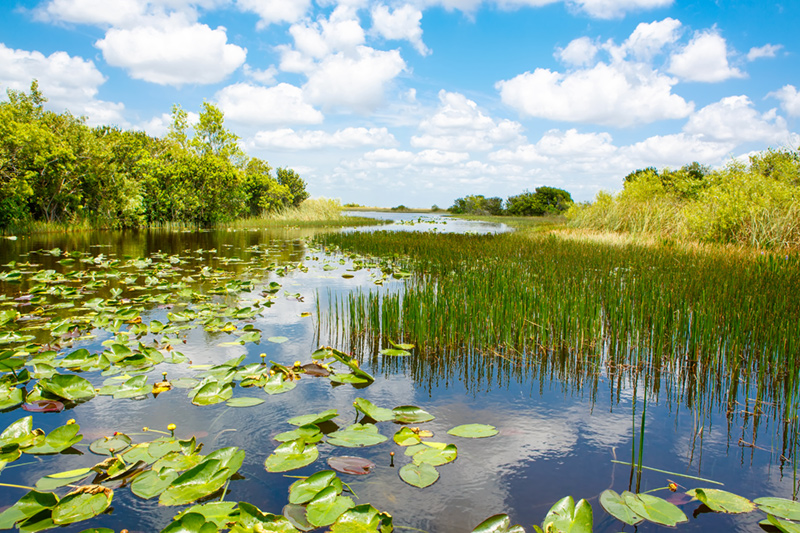
The single overlap is southern Florida, where the American alligator and the American crocodile share the Everglades and the mangrove coast. It is the only place on Earth where you would genuinely need the snout test.
The snout and the teeth
When you do need it, two features do most of the work.
- Snout shape. An alligator's is broad and rounded, a U seen from above. A crocodile's is narrower and more tapered, closer to a V. The wider jaw is built for crushing, the narrower one for gripping.
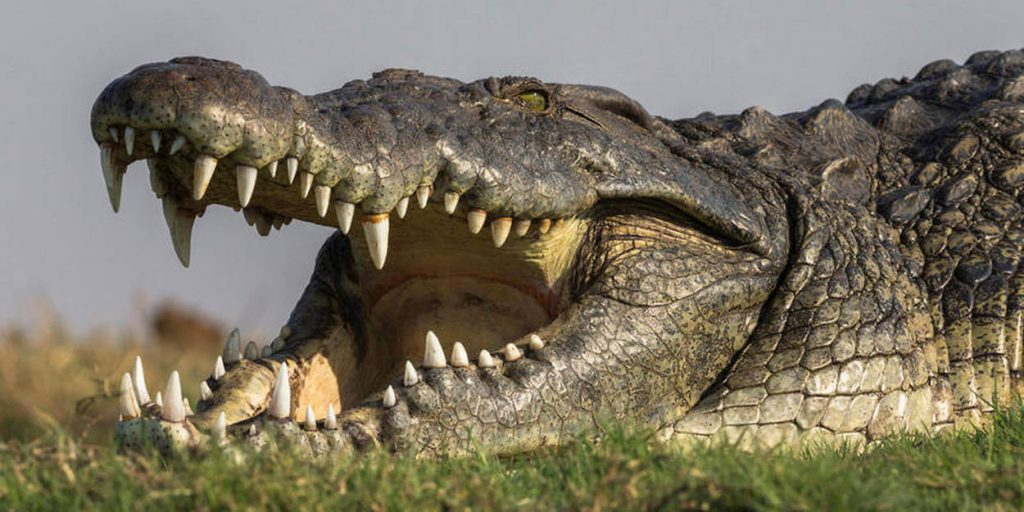
- Teeth. On an alligator the upper jaw is wider than the lower, so when the mouth closes the lower teeth vanish inside it. On a crocodile the jaws are about equal in width, and the enlarged fourth tooth on each side of the lower jaw stays visible, producing that permanently toothy look.
Colour is a useful secondary clue. Alligators tend toward dark grey or nearly black, while most crocodiles are lighter, olive or tan.
Salt is the real dividing line
The difference that actually shapes the two maps is physiological rather than visual.
Crocodiles have working salt glands on the tongue that let them excrete excess salt, so they can live in estuaries, mangroves and open sea. Saltwater crocodiles cross substantial stretches of ocean, which is how the species came to occupy such an enormous range.
Alligators have the same glands, but they do not function. That confines them to fresh water, which is why the American alligator's range stops where coastal wetlands turn saline, and why the two species in Florida sort themselves out along exactly that line: alligators inland in the freshwater marsh, crocodiles out in the brackish mangroves.
They are not the only crocodilians
Both belong to the order Crocodilia, which contains two more groups people regularly mislabel.
Caimans are alligator relatives spread across Central and South America, generally smaller, and the spectacled caiman is among the most abundant crocodilians alive. The gharial of northern India is unmistakable and closely related to neither: an extremely thin, needle-like snout built for catching fish, on one of the most endangered large reptiles in the world.
Status, and one comeback worth knowing
Conservation status varies enormously across the family. The American alligator is a real success story, recovering from near-collapse in the mid-twentieth century to Least Concern today after hunting was banned and habitat protected. The saltwater and Nile crocodiles are also Least Concern.
At the other end sit the Chinese alligator and the gharial, both Critically Endangered, with the American crocodile listed as Vulnerable.
That spread is exactly what a map makes visible. Animal World Map lets you put the alligator and crocodile ranges side by side, watch them touch only in Florida, and see at a glance which species are secure and which are down to a single river system.
Takeaway
Where the photo was taken answers the question nearly every time. When it does not, look at the closed mouth. Hidden lower teeth and a broad U-shaped snout mean alligator. A visible fourth tooth and a tapered snout mean crocodile.
Get the mobile app now
Explore wildlife anywhere, even offline.
 App Store