Cheetah vs Leopard vs Jaguar: How to Tell Them Apart
August 5, 2026 · 4 min read
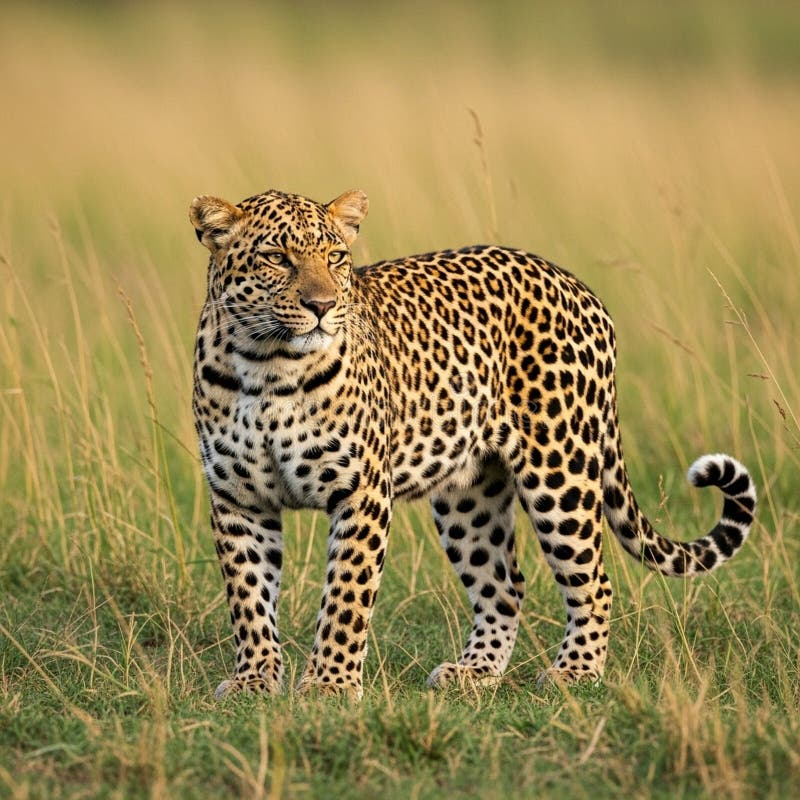
Three large spotted cats get mixed up more often than almost any other animals on Earth. Stock photo libraries mislabel them, documentaries occasionally swap them, and even zoo signage gets it wrong.
Telling them apart is easier than it looks. And the single most reliable clue has nothing to do with the animal itself.
Geography settles most cases instantly
Jaguars live only in the Americas, from Mexico south through Central and South America to northern Argentina, with the occasional individual crossing into southern Arizona. Leopards live only across Africa and Asia.
Their ranges do not overlap anywhere on Earth. Not in a single forest, not on a single continent. So a big spotted cat photographed in the Amazon is a jaguar, and one photographed in Kenya or India is not.
Cheetahs do share Africa with leopards, plus one small surviving population in Iran. That is the only pairing where you genuinely have to look at the animal.
Read the coat
The pattern is the fastest visual check, and each cat wears a different one.
- Cheetah: solid, round, black spots scattered evenly across a tan coat, with no rosettes anywhere on the body.
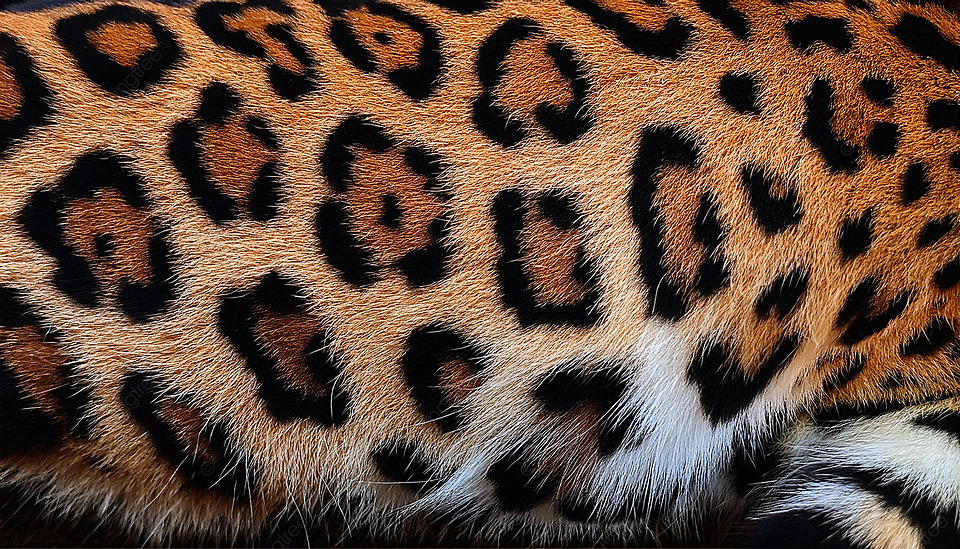
- Leopard: rosettes, meaning rose-shaped clusters of dark marks. They are small, tightly packed and empty in the middle, usually 2 to 5 cm across.
- Jaguar: rosettes again, but larger and more widely spaced, and almost always with one or more small black dots inside them.
If you remember one line, make it this one. Plain spots mean cheetah, empty rosettes mean leopard, filled rosettes mean jaguar.
Read the build and the face
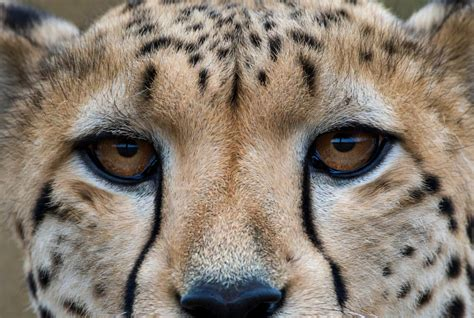
Up close the cheetah is unmistakable. Black tear marks run from the inner corner of each eye down to the mouth, cutting glare on the bright open savanna. The whole animal is built like a greyhound: tall, lean, small-headed and deep-chested, with long legs, a long rudder-like tail, and blunt semi-retractable claws that leave visible tips in its tracks.
The leopard is the opposite build. Compact, heavily muscled, shorter in the leg, thick through the neck, with a broad head and no facial markings.
The jaguar is heavier still, with a blocky square head and short, stocky limbs. That skull houses the strongest bite of the three, roughly 1,500 psi by commonly cited estimates, which is what lets a jaguar kill by piercing the skull directly and crack open turtle shells. A leopard bites at around a third of that, and the cheetah, with its lightweight skull, is weaker again. Each of these cats trades one advantage for another.
Behaviour follows the build. Cheetahs hunt by day, running prey down in the open. Leopards hunt mostly at night, ambush their prey, and are exceptional climbers that haul kills up into trees to keep them from lions and hyenas. Jaguars are strongly tied to water, swim readily, and are the only one of the three you might see crossing a river by choice.
Speed, and a myth worth dropping
The cheetah is the fastest land animal, but the familiar figure of 70 to 75 mph is not supported by any measurement.
The fastest documented run belongs to Sarah, a cheetah at the Cincinnati Zoo, who covered 100 metres in 5.95 seconds at a peak of 61 mph. In the wild, GPS-collared cheetahs studied in Botswana and published in Nature in 2013 never exceeded 58 mph, and averaged considerably less on real hunts. A realistic ceiling sits somewhere around 58 to 64 mph.
The genuinely astonishing number is the acceleration: roughly zero to 60 mph in about three seconds. Cheetahs win hunts through acceleration and cornering, not raw top speed. Leopards top out near 36 mph, and jaguars are ambush hunters that barely sprint at all.
Where each cat stands today
The cheetah is listed as Vulnerable on the IUCN Red List, with roughly 6,500 mature individuals left. The Asiatic cheetah survives only in Iran, where fewer than 30 remain. Leopards are Vulnerable too, though that single label hides enormous variation: the Amur leopard of the Russia and China border is Critically Endangered, with about 100 animals in the wild. Jaguars are listed as Near Threatened and declining, with populations outside the Amazon core under the most pressure.
Numbers like these are easier to understand next to a map, which is exactly what Animal World Map is built for. Put the three ranges side by side and the identification rule stops being a fact to memorise and becomes something you can simply see: two continents for the leopard, one hemisphere for the jaguar, and a shrinking scatter of savanna for the cheetah.
Takeaway
Check where the photo was taken first. If that does not settle it, look at the rosettes, then the face. Plain spots and tear stripes mean cheetah. Empty rosettes mean leopard. Filled rosettes and a heavy square head mean jaguar.
Get the mobile app now
Explore wildlife anywhere, even offline.
 App Store