
Whale Watching Month by Month: Where to Go and When
August 8, 2026 · 4 min read
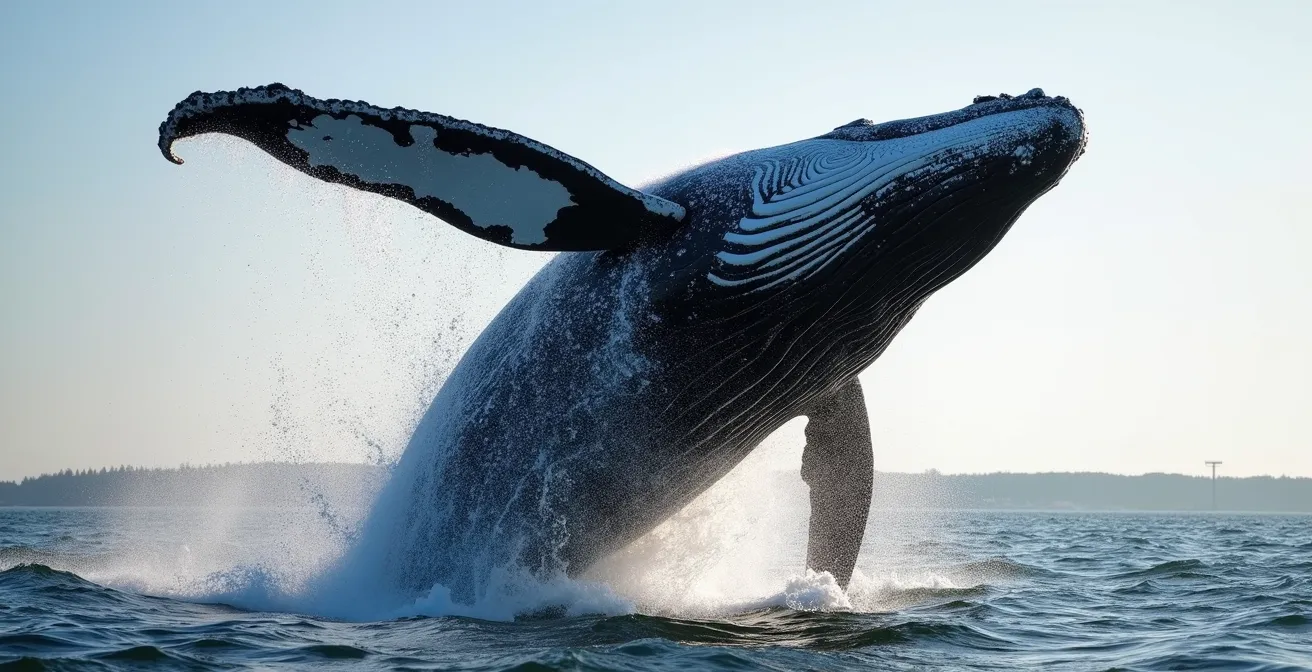
Most wildlife watching is a gamble. Whale watching is closer to a timetable.
Great whales split the year in two. They feed in cold, food-rich polar and temperate water during that hemisphere's summer, then travel toward the tropics to breed and calve in winter. Because the two hemispheres run opposite seasons, it is always peak whale season somewhere. The only question is where.
December to April: the northern winter
This is calving season in the warm north, and the season for mothers with young calves in clear, shallow water.
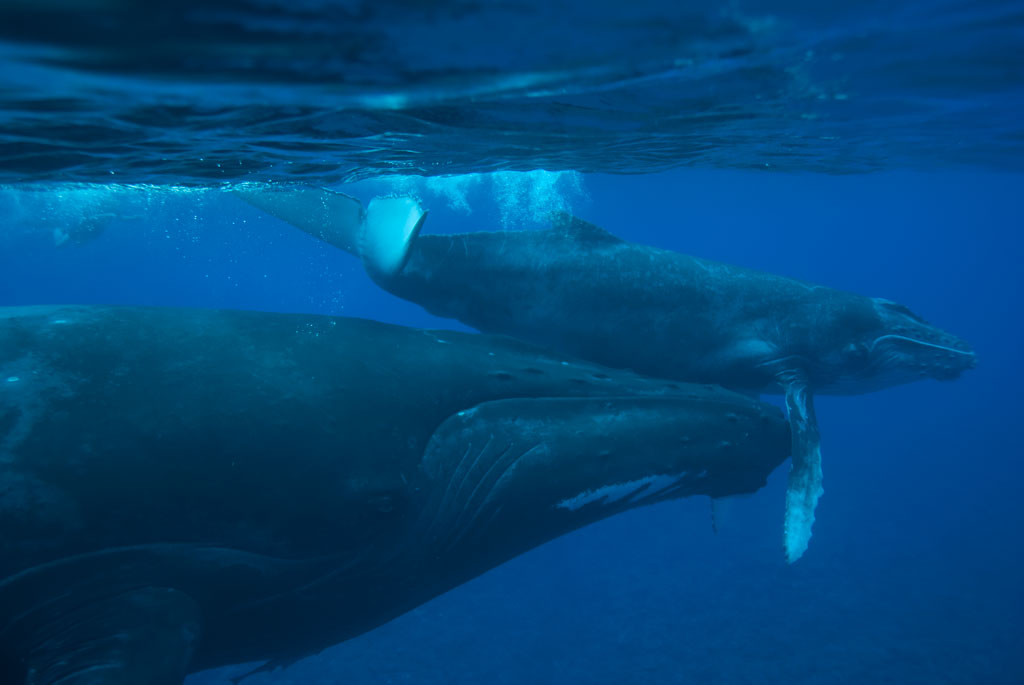
- Hawaii is the humpback benchmark. NOAA estimates that up to 12,000 whales, more than half the North Pacific humpback population, return to Hawaiian waters between November and May. The sanctuary season runs from 15 December to 15 May, peaking January through March.
- Baja California in Mexico fills with grey whales from January to April. In the Pacific lagoons of San Ignacio and Magdalena Bay, mothers and calves approach boats voluntarily, which happens reliably nowhere else on Earth. Blue, fin and sperm whales gather in the nearby Sea of Cortez.
- Silver Bank, off the Dominican Republic, draws thousands of North Atlantic humpbacks from January to April. It is one of very few places where snorkelling with them is legal.
- Sri Lanka, off Mirissa, puts blue whales and sperm whales within reach of a short boat trip, roughly December to April.
May to September: the northern summer
The whales move north to eat, and the feeding behaviour is the spectacle.
- Alaska: humpbacks and orcas from May to September, including cooperative bubble-net feeding, where a group blows a spiral of bubbles to trap herring.
- Monterey Bay, California: one of the densest blue whale concentrations anywhere, feeding from June to October, with humpbacks from April to November.
- Husavik, Iceland: humpbacks and minke whales under near-endless daylight, best June to August.
- Norway: sperm whales year-round off Andenes, beside the deep Bleik Canyon. The famous orca and humpback herring hunt shifts to the fjords near Tromso from about November to January.
- The Azores: resident sperm whales all year, with blue, fin and sei whales passing on migration from April to June.
June to November: the southern winter
Below the equator the calendar flips completely.
- Hermanus, South Africa: southern right whales come close enough to watch from the clifftops, June to November, peaking in September.
- Hervey Bay, Australia: humpbacks stop to rest with their calves from July to October.
- Peninsula Valdes, Argentina: southern right whales gather to breed from June to December, peaking around September and October.
- Tonga: one of the few places worldwide where swimming with humpbacks is permitted, July to October.
- Kaikoura, New Zealand: resident sperm whales year-round over a deep offshore canyon, with humpbacks passing June to August.
- Antarctica: the finale, December to March, with humpbacks, minke whales and orcas along the Peninsula.
The migrations behind the calendar
Grey whales make the longest migration of any mammal, a round trip of roughly 16,000 to 20,000 km between Arctic feeding grounds and Mexican lagoons. The record holder is Varvara, a nine-year-old female tracked from Sakhalin Island across the Pacific and back: 22,511 km in 172 days, published in Biology Letters in 2015.
Humpbacks are the other great travellers, with tracked journeys of more than 18,000 km between Antarctic waters and the coast of Colombia.
These routes are what make the calendar work, and they are also why a map explains whale watching better than a list of dates ever will. Animal World Map lets you see where each species actually ranges, so a season stops being trivia and becomes a route you can follow.
Watching without disturbing
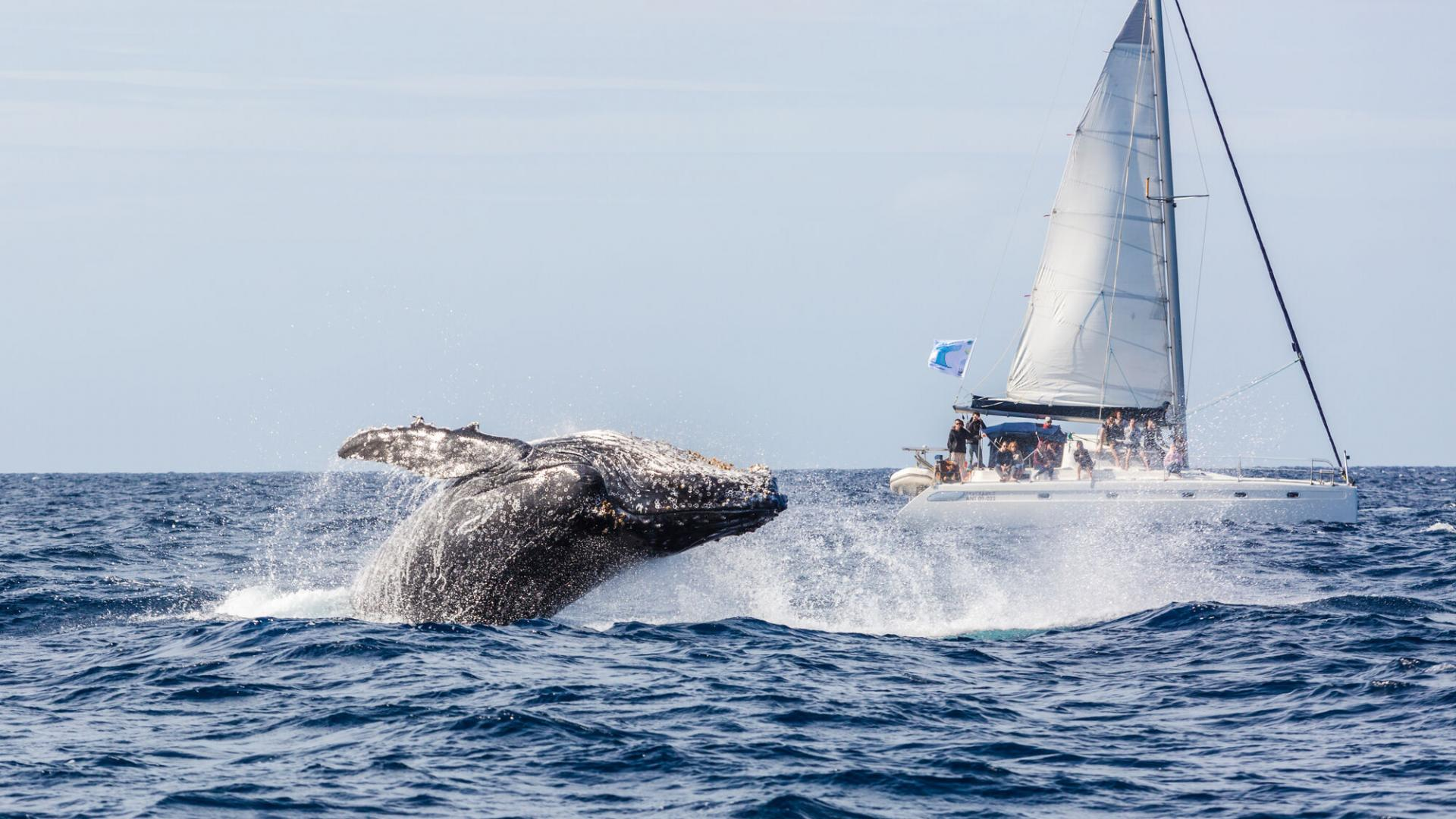
Whales are approachable, which is exactly why the rules matter. NOAA requires boats in US waters to stay at least 100 yards from most large whales, 200 yards from killer whales in Washington State, and 500 yards from North Atlantic right whales, with viewing limited to 30 minutes.
A good operator keeps its distance, never boxes an animal in or cuts across its path, and shuts off the engine if a whale chooses to come closer. If a boat is chasing whales, you are on the wrong boat.
There is real good news here too. Both the humpback and the southern right whale were moved to Least Concern on the IUCN Red List in 2018 after recovering from commercial whaling, though some local populations remain Endangered. Blue whales and sei whales are still listed as Endangered.
Takeaway
Pick the hemisphere by season, then the coastline by species. Northern winter for calving humpbacks and grey whales, northern summer for feeding blues and bubble-netting humpbacks, southern winter for right whales and swim-with humpbacks. There is no wrong month, only a wrong ocean.

Get the mobile app now
Explore wildlife anywhere, even offline.
 App Store