Why Do Animals Migrate? The Science Behind Nature's Great Journeys
August 9, 2026 · 4 min read
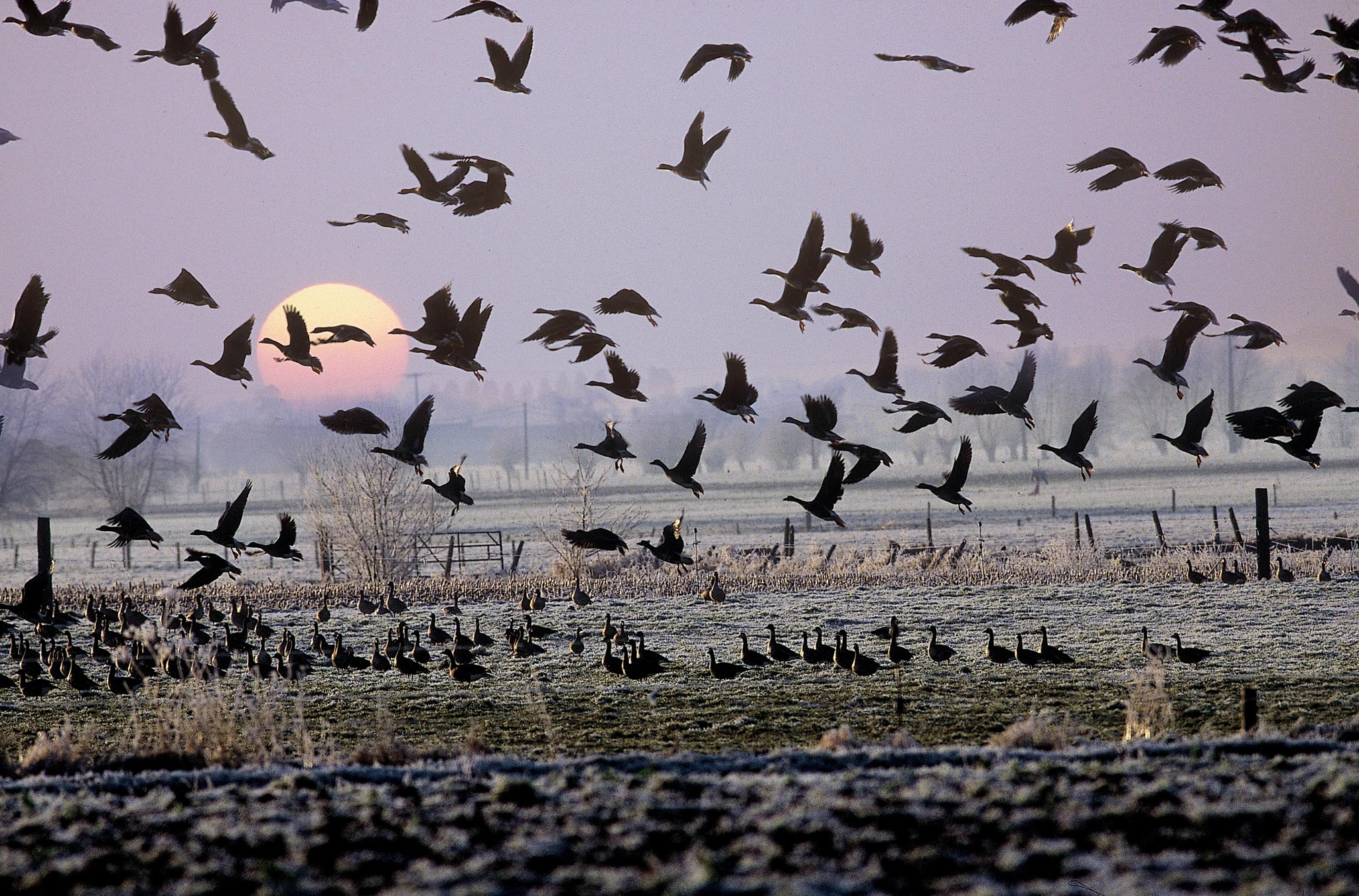
Birds cross oceans without landing. Butterflies fly to a forest they have never seen. Whales swim the length of a hemisphere and back, twice a year, for their entire lives.
Migration looks like an extravagance. It is closer to an accounting decision.
What actually drives migration
Nearly every migration comes down to one calculation: the cost of leaving is lower than the cost of staying.
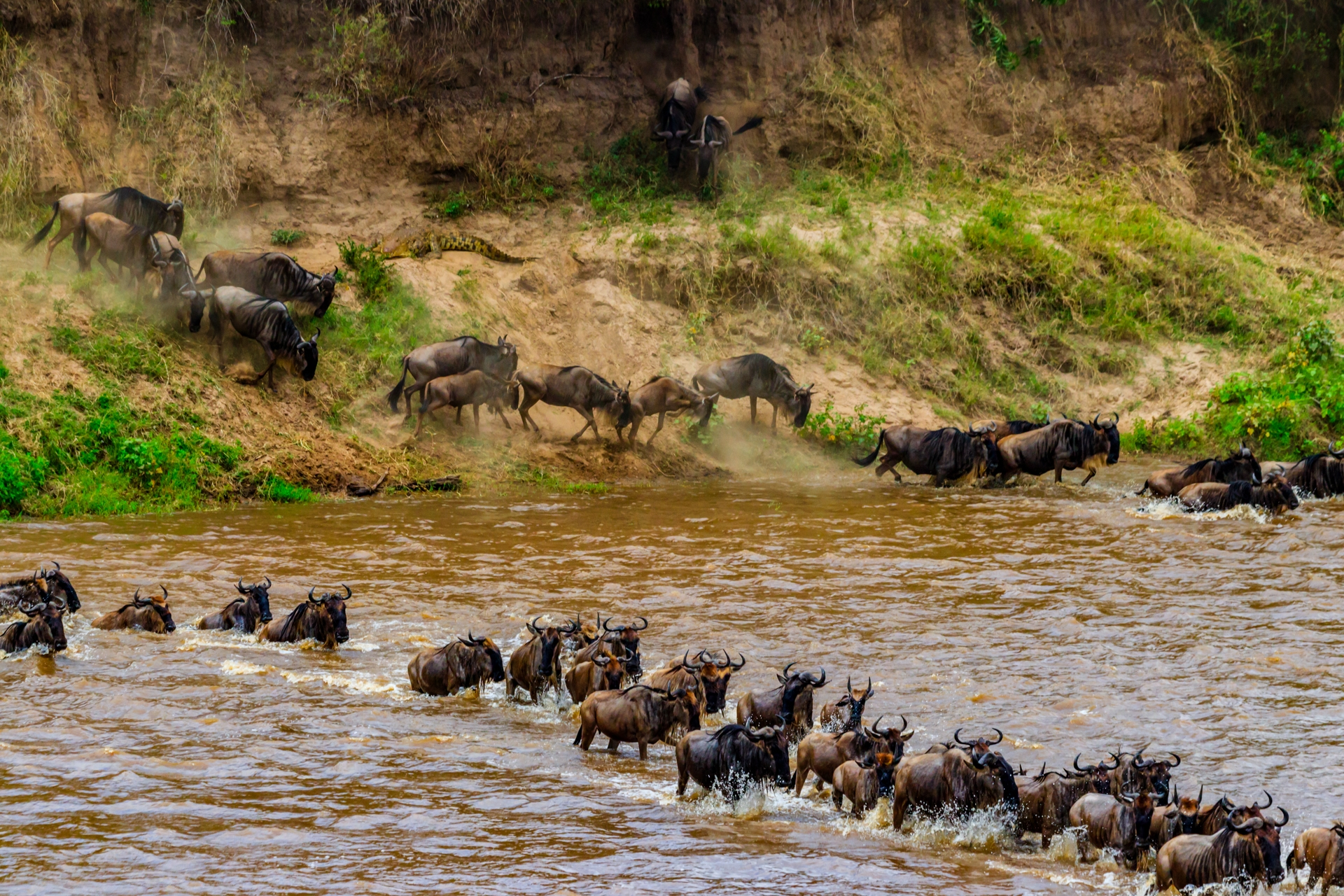
The usual pressure is food. High latitudes are extraordinarily productive in summer, with long days, insect explosions and plankton blooms, and close to uninhabitable in winter. An animal that can move exploits the good season in one place and skips the bad season entirely.
Breeding is the second driver. Many species need conditions for raising young that are quite different from the conditions for feeding. A whale calf needs warm, shallow water with few predators. A shorebird chick does well on Arctic tundra with 24-hour daylight and almost no snakes. Grey whales feed in the Arctic and calve in Mexican lagoons because no single place offers both.
Not all migration runs north to south. Some animals simply move up and down mountains with the seasons. And the largest migration on Earth by sheer biomass is vertical and happens daily: countless small ocean animals rise hundreds of metres to feed near the surface at night, then sink back into the dark before dawn.
How animals find their way
There is no single mechanism. Migrating animals stack several and switch between them as conditions change.
- Magnetic sense. Many birds, sea turtles and fish detect Earth's magnetic field, which gives them both a compass direction and a rough sense of latitude.
- Sun and star compasses. Birds use the sun's position corrected for time of day, and night migrants orient by the rotation of the star field around the celestial pole.
- Polarised light. The pattern of polarisation across the sky reveals where the sun is even under cloud or after sunset.
- Smell. Salmon imprint on the chemical signature of the stream they hatched in and use it to find that exact stream years later.
- Memory and landmarks. Long-lived species such as whales and ungulates learn their routes, and experienced older individuals lead.
The remarkable part is how much of this is inherited rather than taught. Many young birds migrate alone, weeks after their parents have already left, and still arrive at a wintering ground they have never seen. Direction, distance and timing are written into them before they hatch.
Bodies rebuilt for the journey
Migration is not only behaviour. It is a physical transformation.
Before departure, birds enter a phase of hyperphagia, eating far beyond normal and converting the surplus into fat that can push their body weight up by half or more. Some species shrink their digestive organs to save weight in flight and enlarge their flight muscles, then rebuild the gut once they arrive.
Caged migratory birds show a restlessness at precisely the season they should be departing, fluttering toward the correct compass direction with nowhere to go. The urge runs on an internal calendar, not on the weather outside the window.
The record holders
- The Arctic tern holds the annual distance record, chasing summer between the Arctic and the Antarctic for roughly 40,000 km a year, and considerably further on looping routes.
- The bar-tailed godwit holds the non-stop record. One tracked bird flew about 13,560 km from Alaska to Tasmania across eleven days without landing, feeding or drinking.
- The grey whale makes the longest mammal migration. A female named Varvara was tracked over 22,511 km in 172 days.
- The monarch butterfly reaches the fir forests of central Mexico on a journey no individual completes. It takes several generations, and the butterflies that arrive are the descendants of those that set out.
- The globe skimmer dragonfly appears to cross the Indian Ocean on a multi-generational circuit of up to 18,000 km.
Why migration routes are fragile
A migration is only as strong as its weakest link. A bird flying 10,000 km may depend on three or four stopover sites where it refuels. Lose one and the whole route collapses, even if the start and end points are untouched. Fences, dams, cities and shipping lanes cut corridors that have been in use for thousands of years.
Timing is the newer problem. Many species take their departure cue from day length, which does not change, while the food they are travelling toward now peaks earlier in a warming climate. The animals arrive exactly on schedule and find the season already finished.
This is why a range map says more than a range list. Animal World Map shows where a species actually lives across the year, and a migratory range looks immediately different from a resident one: two distant zones joined by a corridor that has to stay intact for either end to mean anything at all.
Takeaway
Migration is not wanderlust. It is a strategy for living in two places that are each habitable only half the year, run on inherited maps and borrowed daylight. And it works only as long as every link in the chain survives.
Get the mobile app now
Explore wildlife anywhere, even offline.
 App Store